Real War: Not Fake
Heseri GamesAction
3.31.84K Reviews
- Version
- 4.6.27
- Installs
- 1.00M
- Age Rating
- Everyone 10+
Screenshots
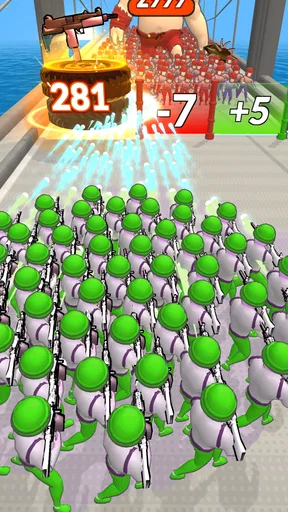
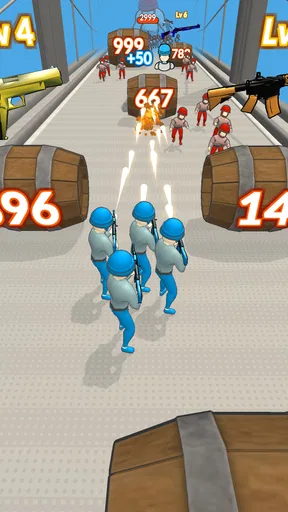
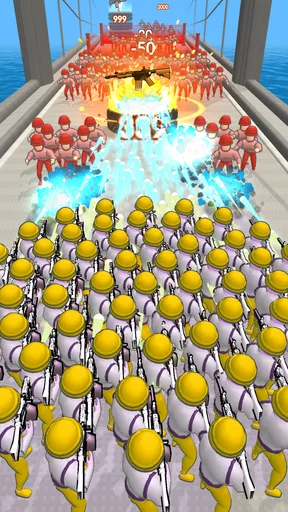
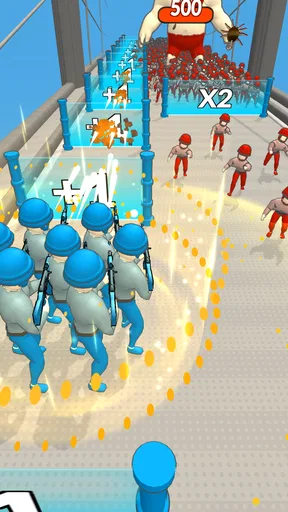
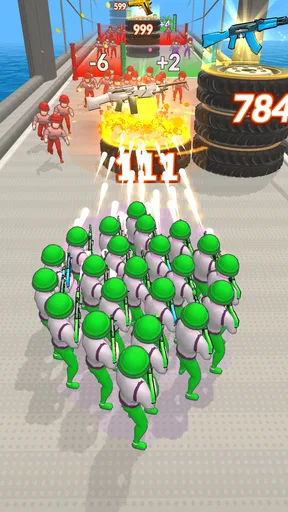
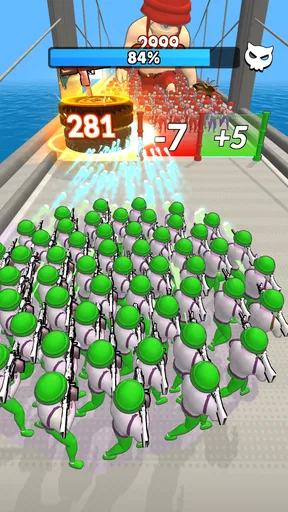
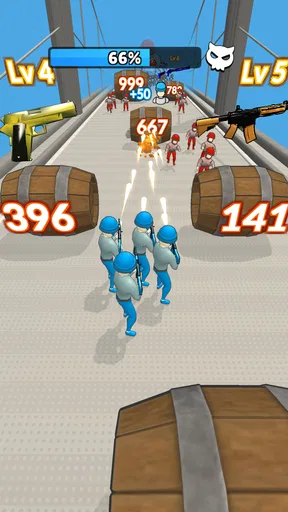
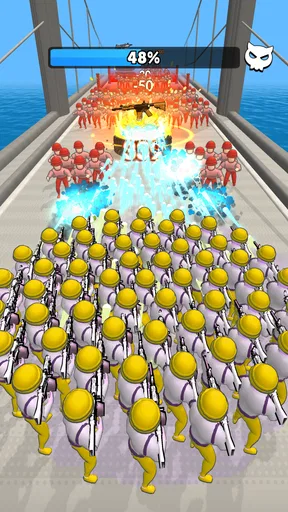
Our Review of Real War: Not Fake
 Analysis by Appyee
I went into Real War: Not Fake expecting a quick action game, and that is exactly where it fits best. It puts the emphasis on immediate movement, defense, shooting, and fighting rather than long preparation. The first few moments are easy to understand: react to danger, choose when to attack, and try to stay in control long enough to keep the run alive. That directness is the game’s strongest quality, but it also explains why some players may find it repetitive after extended sessions.
This is a free action game from Heseri Games, aimed at players aged 10 and over. It has passed 500K installs, with a 3.3 average from around 7.2K ratings and about 1.4K written reviews. Those numbers suggest a game with a real audience but also a mixed reception, which matches my experience: the basic combat idea is accessible and entertaining, while the longer-term appeal depends heavily on how much repetition you personally tolerate.
How the action loop feels from the first move
I treat the opening moments as a chance to learn the game’s pace, not as a test of how quickly I can attack. That distinction helps me notice whether I’m reacting deliberately or just tapping under pressure, which is often the difference between a satisfying attempt and a frustrating one. Next, I look at a few simple setup checks that can make those reactions feel more dependable.
The first action is immediate rather than complicated
The best way to understand this game is to stop looking for a long introduction and start playing. Its central promise is built around action: dodge an incoming threat, defend yourself, shoot when there is an opening, and fight when the distance closes. That sequence gives the opening moments a clear purpose. I am not spending my first session learning a large collection of menus or trying to understand a complicated role-playing system. I am watching the situation and responding.
That simplicity is useful when I want something I can pick up without preparation. A short break during the day is enough to get into the action, and the game does not require the same commitment as a large strategy title or a story-heavy adventure. If you normally choose mobile games because they are easy to start, this design works in its favor.
The trade-off is that the game’s first impression depends almost entirely on whether you enjoy reactive combat. Players who prefer careful planning, deep character building, or a clearly developed narrative may feel that the experience starts too abruptly. The action is the point, so anyone hoping for a broad campaign structure should approach it with different expectations.
Why dodging matters more than simply attacking
My most useful early adjustment was to stop treating the attack button as the answer to every problem. The game’s rhythm becomes more manageable when I pay attention to defense first. Dodging creates space, defense buys time, and shooting or fighting becomes more effective when I am not reacting in panic. This makes the core loop more than a simple test of how quickly I can attack.
A practical approach is to watch the opponent’s pressure before committing to an offensive move. When the screen becomes busy, surviving the next moment is usually more valuable than forcing one extra attack. That small change in priority makes the game feel less random and gives the player more control over the outcome. It is also the kind of lesson that is easy to miss if you focus only on the game’s aggressive presentation.
I would recommend using the opening of each encounter to establish a safe rhythm instead of immediately trying to finish everything. Learn how much room you need to dodge, notice when defense is safer than movement, and attack during the brief moments when the danger is less demanding. This is not a hidden menu feature; it is a play habit, but it makes a meaningful difference to how fair the combat feels.
The feedback rhythm keeps another attempt tempting
Every action gives a quick response. A successful dodge feels different from taking a hit, a defensive choice changes the pressure, and an accurate attack creates the sense that I made the right decision at the right time. That feedback is what keeps the game readable. Even when a run ends badly, I can usually identify whether I moved too late, attacked too early, or failed to create enough space.
This clarity matters because action games can become frustrating when defeat feels unexplained. Here, the loop encourages me to blame a decision rather than the entire system. I may think, “I should have defended there,” or “I rushed that attack,” and that thought naturally leads to another attempt. The game does not need a large amount of text to communicate its basic lesson; the combat response does most of the work.
There is a limit, though. Immediate feedback is satisfying at first, but it cannot replace variety forever. If the encounters begin to feel too familiar, the same dodge-and-attack rhythm may lose some of its impact. That is the main weakness I noticed: the game is strongest in short bursts, while longer sessions can expose the narrowness of its central structure.
Playing in short breaks is where it makes the most sense
A realistic use case is a ten-minute break when I want some involvement but do not want to begin a large game. I can open it, focus on the next threat, make a few decisions, and stop without needing to remember a complicated plot or manage a large inventory. That makes it a better fit for casual action sessions than for players searching for a long evening experience.
It also works for someone who enjoys repeating a challenge to improve personal reactions. The satisfaction comes from making the next run cleaner: dodging earlier, defending with more patience, and choosing attacks with better timing. If that kind of self-correction is enjoyable to you, the repetition has a purpose. If you need constant new locations, characters, or objectives, the same loop may feel too restrained.
Where the reward fits into the experience
The reward side of the loop is important because it gives each attempt a reason to continue beyond simple survival. I approach a run with two goals: deal with the immediate threat and improve the next decision. Even when the outcome is not perfect, a better sequence of actions feels like progress. The reward is therefore partly practical and partly psychological—the game encourages me to chase a cleaner result.
This is a useful distinction when deciding whether the title suits you. Some players need a large collection system or a strong narrative payoff after every encounter. I did not find the experience compelling for that reason. I found it compelling when the action itself became more controlled. The reward is strongest for players who enjoy mastering a compact set of actions rather than constantly unlocking new categories of content.
Because the game is free to download, it is easy to test this loop without paying at the start. There are optional in-app purchases ranging from $1.99 to $14.99 per item, so I would treat spending as a personal choice rather than part of the basic decision to try it. My advice is simple: play long enough to decide whether the dodge, defense, shooting, and fighting cycle is enjoyable before considering any purchase.
A useful way to measure progress without overplaying
Instead of judging a session only by whether I won, I use one specific improvement target. In one attempt I may concentrate on avoiding unnecessary hits; in another, I may focus on waiting for a safer attack window. This turns repetition into practice rather than mindless restarting. It also helps reveal whether the game has enough depth for me personally.
That approach is especially helpful for younger players within the Everyone 10+ rating. The controls and objectives are easier to discuss than the systems in a more complex action role-playing game, but the game still rewards patience. A parent choosing it for a child should expect fast combat rather than a quiet puzzle experience, and should also remember that optional purchases are present.
The reset is the reason the next session begins
When a run ends, the reset is quick enough to keep the previous mistake fresh in my mind. I do not need a long explanation to understand what I want to change. The next session starts with a clear question: can I handle the same kind of pressure more effectively this time? That short distance between failure and retry is central to the game’s appeal.
Resetting quickly can be motivating, but it can also become a trap for players who dislike repeating failed attempts. I have found it best to stop after a few unfocused runs rather than keep tapping through frustration. A short break often makes the next attempt more useful, because the game rewards attention and timing more than sheer persistence.
This reset structure also separates the title from slower alternatives in the action category. A traditional campaign game may offer more exploration and a stronger sense of journey, while a tactical game may ask me to plan several moves ahead. Real War: Not Fake is more immediate. It asks what I can do in the next moment, then gives me another chance to apply the lesson.
Comparison with familiar action-game alternatives
Compared with a large action game built around exploration, this one is easier to enter but less expansive. I do not choose it when I want a world to investigate or a story to carry me through a long session. Compared with a competitive multiplayer action title, it is more suitable when I want to practice my own reactions without depending on another player’s schedule or skill level.
It also occupies a different space from turn-based combat. Turn-based games give me time to calculate, while this game’s appeal comes from responding under pressure. If I am tired and want calm decision-making, I would choose the slower alternative. If I want a compact burst of attention and movement, this game is the better match.
The comparison with endless-runner games is closer. Both can encourage repeated attempts, but this title gives the repetition a more combative shape through its focus on dodging, defending, shooting, and fighting. The important question is whether those actions remain satisfying after the novelty fades. For me, they do in short sessions, but not equally well as an all-night game.
Device and version details worth knowing
The current version is 4.6.23, and the game supports devices running Android 6.0 or later. That makes it accessible to people using older compatible Android hardware, although actual comfort will still depend on the phone’s screen, controls, and performance. Fast action is much easier to enjoy when touch input feels responsive, so I would pay attention to whether your device lets you move and react comfortably.
It is worth keeping expectations realistic on a smaller screen. When several threats demand attention, visual clarity and finger placement matter more than they would in a slower game. I found that playing with deliberate movements helped more than frantic tapping. If your phone feels cramped or your hands cover important action, the experience may become frustrating even if the game itself is working as intended.
Who should try it and who should skip it
I would recommend this game to someone who wants free, direct mobile action and enjoys improving through repeated attempts. It is a good fit for short breaks, quick reaction practice, and players who like a simple loop with an obvious restart point. The lack of a long setup is a genuine advantage when I want to play immediately.
I would be more cautious recommending it to players who need a substantial story, extensive customization, strategic planning, or a constantly changing set of objectives. Those players may get more satisfaction from a campaign-focused action game or a deeper tactical alternative. I would also skip it if repeated combat quickly feels like work rather than entertainment.
The mixed average rating is useful context rather than a final verdict. A 3.3 average from around 7.2K ratings indicates that the game will not suit everyone, but it does not make the experience impossible to enjoy. Its strengths are concentrated in immediacy and repeatable combat, while its limitations appear when I ask it to provide the breadth of a larger game.
My verdict on the action-feedback-reward-reset loop
After spending time with it, I see Real War: Not Fake as a focused action game rather than a complete all-purpose gaming experience. The first action is easy to understand, the feedback is quick enough to teach better timing, and the reset makes another attempt feel natural. That chain—act, read the response, improve, and restart—is the reason the game works.
My strongest tip is to play with a defensive mindset at first. Dodging and defending are not interruptions before the “real” action; they are what create safer opportunities to shoot and fight. I would also set a clear goal for each run and stop when the attempts become automatic. Those two habits make the compact design feel more deliberate and help avoid the repetition becoming tiring.
For a free Android action game from Heseri Games, it offers a straightforward way to fill short sessions with reactive combat. The age rating of Everyone 10+ makes its audience broad, while the optional purchases mean families and younger players should keep spending in mind. I recommend trying it if you want immediate action and enjoy learning from each failed run. I would not recommend it as a replacement for a deep campaign or a richly varied action adventure, but as a quick repeat-and-improve game, it has a clear purpose and a reasonably satisfying loop.
Privacy and Permissions
See what permissions an app requests and how it handles your data.
- Wi-Fi connection information
- view Wi-Fi connections
- Other
- view network connections, full network access, control vibration, prevent device from sleeping, Google Play license check
Verdict
Strengths of Real War: Not Fake
- Quick matches make it easy to play during short breaks.
- Strategic decisions matter more than simply tapping rapidly.
- The war-themed presentation creates a tense competitive atmosphere.
- Progression gives regular players reasons to return each day.
- Simple controls make the game approachable for newcomers.
Limitations of Real War: Not Fake
- Some upgrades may take considerable time without frequent play.
- The interface can feel crowded when several systems unlock.
- Matchmaking may occasionally pair players with noticeably stronger rivals.
- Repetitive battles can reduce variety during longer play sessions.
- An internet connection may be required for most gameplay features.
Other Releases by Heseri Games
View All
Car Evolve
Simulation3.1

Shoot Die Repeat
Action3.1
Similar Picks in This Category
View All
Temple Run 2: Endless Escape
Imangi Studios4.1

PUBG MOBILE
Level Infinite4.3

Free Fire: 9th Anniversary
GARENA INTERNATIONAL I4.4

Talking Tom: Hero Dash Run
Outfit7 Limited4.3

slither.io
Lowtech Studios3.9

Sniper 3D:Gun Shooting Games
Wildlife Studios4.6
Frequently Asked Questions
What is Real War: Not Fake about?
Real War: Not Fake is a strategy-focused war game centered on planning, resource management, and battlefield decisions rather than simple tap-to-win action. You typically build and improve your base, train units, develop technology, and compete against opposing forces. The experience is aimed at players who enjoy military-themed progression, tactical choices, and gradually expanding their power through regular play.
Can I play Real War: Not Fake offline?
The game is primarily designed as an online experience, especially for features involving account progression, events, rankings, alliances, or battles against other players. An internet connection may therefore be required for the main gameplay systems and synchronization. If you lose connection, some menus or limited content may still open, but you should not expect the complete game to work reliably offline.
Is Real War: Not Fake free to download and play?
Real War: Not Fake can generally be downloaded without an upfront purchase, allowing you to try its core systems before spending money. However, like many mobile strategy games, it may include optional in-app purchases for resources, upgrades, speed-ups, special offers, or other progression benefits. Free players can participate, but advancing quickly may require more patience and regular activity.
Does Real War: Not Fake include multiplayer or PvP battles?
Multiplayer interaction is an important part of the game’s appeal, with systems that may include competitive battles, alliances, rankings, events, or cooperation between players. These features can make progression more engaging, but they also mean that your development may be influenced by stronger or more experienced opponents. Joining an active alliance and learning the game’s mechanics can significantly improve your results.
Is Real War: Not Fake suitable for every age and device?
The game’s military setting, combat themes, strategic complexity, and possible online interaction may make it more appropriate for older children, teenagers, and adults, depending on the official age rating in your region. Performance can also vary between devices. Before downloading, check the required operating system, available storage, permissions, and whether your phone has enough memory to run larger battles smoothly.
Play our best games!


